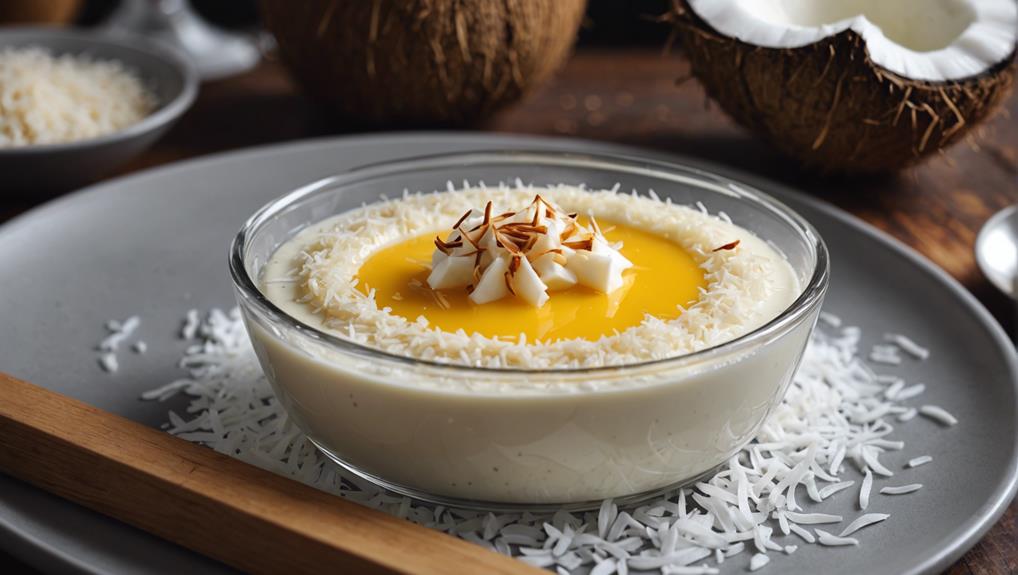
Sous Vide Coconut Custard

Discover the world of sous vide coconut custard. Achieve a flawless blend of precision and tropical essence for a luxuriously smooth dessert experience. Using sous vide technology, you can attain a refined and consistent texture in your coconut custard. Immerse yourself in the domain where flavors meld in perfect harmony, creating a symphony of taste. By exploring this innovative cooking method, you access the potential for an unparalleled custard journey. Uncover the secrets to mastering this delectable treat and elevate your culinary skills to another level.

What You Will Learn Here
- Sous vide technology ensures precise cooking temperatures for perfect coconut custard texture.
- Coconut custard benefits from sous vide's gentle cooking method for a silky smooth consistency.
- Sous vide method allows for consistent and controlled cooking, resulting in a flawless custard.
- Sous vide enhances coconut custard's flavors by preserving the natural essence of ingredients.
- Using sous vide for coconut custard guarantees a luxurious and velvety final texture.
Culinary Roots and Evolution
You can analyze the culinary heritage significance of coconut custard by tracing its origins to traditional Asian and Latin American cuisines.

The evolution of custard, integrating modern techniques like sous vide, showcases the adaptability of this classic dessert.

Traditional cooking methods have been revolutionized by sous vide technology, leading to a refined and precise texture in coconut custard.

Culinary Heritage Significance
In the culinary landscape of Southeast Asia, coconut custard emerges as a revered delicacy that embodies the fusion of traditional custard recipes with indigenous ingredients, showcasing a rich tapestry of flavors and textures.
Coconut, a staple ingredient in countries like Thailand, Vietnam, and the Philippines, plays an essential role in adding a creamy texture and tropical essence to custard. This reflects the culinary heritage of Southeast Asia, where the incorporation of local ingredients into classic recipes has led to the creation of a unique fusion of flavors and textures.
Coconut custard holds significance in cultural traditions, often served during special occasions and celebrations, underscoring its importance in festive menus. The modern approach of using the sous vide technique to prepare coconut custard showcases innovation in transforming traditional recipes for precise and consistent cooking methods.
Evolution of Custard
Emerging from its culinary heritage significance in Southeast Asia, the evolution of custard traces back to ancient Roman times as 'crustardes,' showcased through its popularity and variations in medieval Europe.
Over the centuries, custard recipes have transformed, incorporating diverse flavors and textures. Among the modern variations is coconut custard, which adds a tropical twist to this classic dessert.
The introduction of sous vide cooking has further revolutionized custard preparation, allowing for precise temperature control and resulting in a creamy, silky texture.
Despite these advancements, custard remains a versatile dessert enjoyed worldwide, highlighting its adaptability and enduring appeal in contemporary culinary practices.
Traditional Cooking Methods
Throughout the culinary timeline, traditional cooking methods for custards have undergone significant evolution, reflecting the diverse cultural influences and technological advancements that have shaped this beloved dessert.
Early custard recipes, akin to modern sous vide cooking, often involved baking in a water bath to achieve a smooth texture. Culinary traditions from various countries, including France and England, have influenced custard recipes globally. Achieving the perfect custard required precise temperature control and timing, highlighting the meticulous nature of traditional custard making.
Ingredients like eggs, milk, and sugar have been constants in custard recipes, demonstrating the enduring appeal of this classic dessert. The fusion of traditional techniques with modern approaches, such as sous vide, has paved the way for innovative variations like Sous Vide Matcha Coconut custard.
Coconut Milk as Base
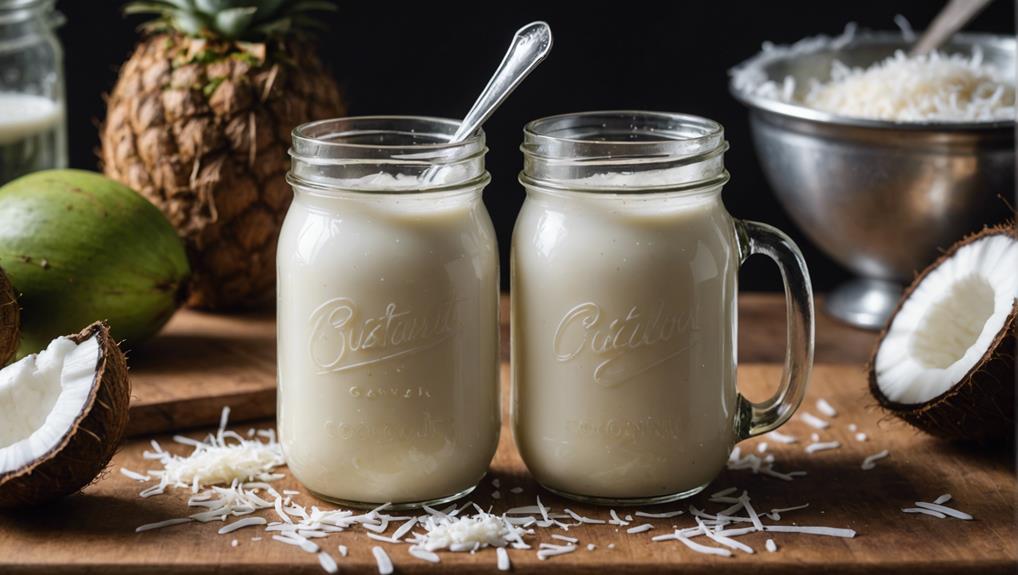
Coconut milk, with its rich and creamy consistency, serves as an excellent base for creating decadent custards. When utilizing coconut milk in your custard recipes, you aren't only adding a tropical flavor but also enjoying a smooth texture that enhances the overall dessert experience.
Here are some key points to bear in mind when utilizing coconut milk as the base for your custard:
- Dairy-Free Alternative: Coconut milk provides a great dairy-free option for individuals with lactose intolerance or those following a vegan diet.
- Health Benefits: High in medium-chain triglycerides, coconut milk may offer advantages like improved metabolism, making it a healthier choice for your custard.
- Natural Sweetness: The inherent sweetness of coconut milk reduces the need for additional sugar in your custard recipe, resulting in a naturally sweet dessert.
- Enhanced Flavor Profile: By incorporating coconut milk into your custard, you elevate the coconut flavor, making it a perfect treat for coconut enthusiasts.
Coconut Custard Variations
Experiment with different variations such as velvety coconut custard, creamy coconut flan, or coconut pandan custard to explore diverse flavor profiles and textures.
Adjusting the sugar level can help tailor the sweetness to your liking, allowing for a personalized gastronomic experience.
Utilizing alternative milks like almond or oat milk can cater to dietary preferences and offer a dairy-free twist to traditional coconut custard recipes.
Velvety Coconut Custard
For a luxuriously smooth texture in your coconut custard variations, consider incorporating matcha powder to infuse a distinctive grassy essence and elevate the antioxidant profile. This addition not only enhances the flavor but also provides numerous health benefits.
When aiming for velvety coconut custard, the following tips can help you achieve the perfect consistency:
- Strain the custard mixture after cooking for a creamy texture.
- Garnish with coconut flakes and black sesame seeds for visual appeal and added texture.
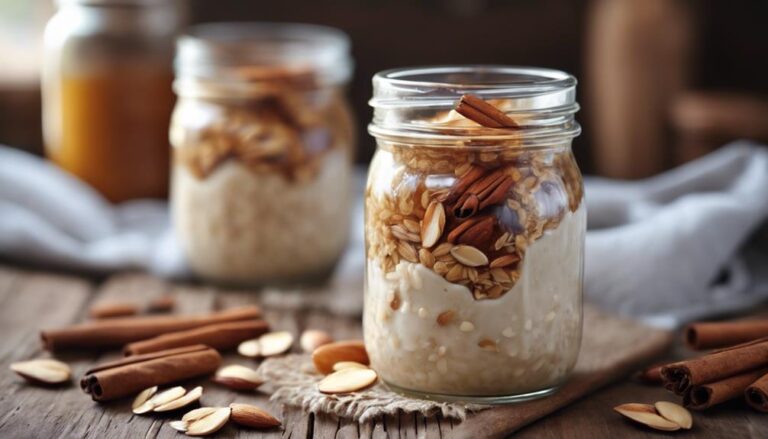
- Store the custards in individual jars in the refrigerator for easy transport and on-the-go enjoyment.
- Experiment with different flavored powders, alternative milks, and garnishes to customize your coconut custard to suit your preferences.
Creamy Coconut Flan
To achieve a velvety texture in your creamy coconut flan, precise control of cooking temperature and duration is essential. When preparing this delectable dessert, consider the following:
- Sous Vide Technique: Utilize sous vide cooking for consistent results.
- Jar Convenience: Opt for individual jars for easy serving and customization.
- Chilling Process: Chill the flan in the refrigerator for best freshness.
- Garnish Options: Experiment with various garnishes like coconut flakes and black sesame seeds for added visual appeal.
Coconut Pandan Custard
When preparing Coconut Pandan Custard, precise calibration of cooking temperatures is essential to achieve the desired infusion of flavors and textures. The combination of coconut and pandan offers a unique and aromatic experience, blending the creamy richness of coconut with the herbal notes of pandan.
Here are some key points to contemplate:
- Unique Flavor Profile: Pandan leaves add a fragrant and distinct flavor to the custard.
- Visual Appeal: The natural green color from pandan leaves enhances the visual presentation of the custard.
- Tropical Delight: The coconut and pandan combination creates a tropical and delightful taste.
- Balanced Sweetness: The custard balances the sweetness of coconut milk with a subtle herbal undertone from the pandan, resulting in a harmonious fusion of flavors.
Custard Texture Enhancements
To achieve ideal creaminess in your custard, consider incorporating ingredients like coconut milk for a rich and velvety mouthfeel.
Enhance the flavor profile by infusing the custard with complementary flavors, such as vanilla or citrus zest.
Adjust the texture of your custard by straining the mixture to guarantee a smooth and silky finish, providing a luxurious eating experience.
Creaminess Enhancers
Enhance the creaminess and richness of your custard by incorporating heavy whipping cream into the mixture. This addition contributes to a velvety texture that is essential for a creamy custard. For a more detailed comparison of creaminess enhancers, refer to the table below:
| Creaminess Enhancers | Description |
|---|---|
| Heavy Whipping Cream | Adds richness and creaminess |
| Full-Fat Coconut Milk | Improves texture |
| Cornstarch or Gelatin | Stabilizes and smoothens texture |
Flavor Infusion Techniques
Infusing various flavors like matcha, rum extract, or lavender can greatly enhance the taste and aroma profile of coconut custard. By incorporating these flavor infusion techniques, you can create a unique and personalized twist to your custard.
Matcha adds a subtle earthy note, rum extract provides a rich depth, and lavender imparts a floral essence, elevating the overall sensory experience. These techniques allow for a harmonious blend of flavors that complement the creamy coconut base.
Experimentation with different infusions opens up a world of possibilities, enabling you to tailor the custard to your preferences. Whether you prefer a bold flavor or a delicate hint, the infusion process offers a versatile way to customize your coconut custard.
Texture Adjustment Methods
Utilize varying egg to milk ratios to manipulate the texture of your coconut custard, achieving a spectrum from soft and creamy to firm and dense.
The addition of cornstarch or flour can act as thickening agents, transforming the custard into a more pudding-like consistency.
Adjusting cooking times and temperatures allows for customization of the final texture, with longer durations resulting in a denser custard.
Incorporating gelatin into the mixture aids in setting the texture, providing a stable custard that holds its shape.
For those seeking a plant-based alternative, agar agar serves as a suitable substitute for gelatin, particularly catering to vegetarian or vegan preferences.
When using these methods, consider employing a water bath during the cooking process to ensure gentle and consistent heat distribution for a smooth and uniform custard texture.
Final Thoughts
In concluding your exploration of sous vide coconut custard, consider the versatility and creativity that experimenting with various flavors and ingredients can bring to this delightful dessert. Custard, inherently a versatile dessert base, can be elevated with the addition of matcha powder for a unique flavor profile, not to mention the added health benefits from antioxidants present in matcha.
The presentation of chilled custards garnished with coconut flakes and black sesame seeds not only enhances the visual appeal but also adds contrasting textures and flavors to each bite.
Individual jar servings offer convenience for transport and portion control, making them perfect for gatherings or on-the-go treats. Moreover, the beauty of custard lies in its adaptability to different flavor profiles – whether through extracts, alternative milk types, or even the incorporation of various spices, the possibilities for creating delectable variations of coconut custard are endless.
Frequently Asked Questions
Can I Substitute Coconut Milk With Another Type of Milk?
You can substitute coconut milk with various milk alternatives like almond, soy, or oat milk. Each option will bring a unique flavor profile and texture to your dish, so choose based on your preferences.
How Can I Adjust the Sweetness of the Custard?
To adjust the sweetness of the custard, you can experiment with adding small amounts of sweeteners like sugar or honey gradually. Taste as you go until you reach your desired level of sweetness.
What Are Some Alternative Toppings for Coconut Custard?
To enhance your coconut custard, consider sprinkling it with toasted coconut flakes for added texture and flavor. These flakes provide a crunchy contrast to the creamy custard, elevating your dessert experience to a new level.
Can I Use Fresh Coconut Instead of Coconut Milk?
Yes, you can use fresh coconut instead of coconut milk. Fresh coconut will add a more intense and natural coconut flavor to your dish. Grate the coconut to extract the milk, blend it well, and sprinkle some coconut flakes for added texture.
Is It Possible to Make This Custard Without a Sous Vide Machine?
Yes, you can make this custard without a sous vide machine by utilizing the oven method. This technique involves baking the custard in a water bath at a low temperature to achieve a similar slow and gentle cooking process.
Conclusion
To sum up, sous vide coconut custard offers a unique and precise method for achieving a creamy and velvety texture. By utilizing coconut milk as a base, the custard can be customized with various flavorings and enhancements to suit individual preferences.
The controlled temperature of the sous vide cooking process guarantees a consistent and perfect custard every time. Experimenting with different variations and techniques can lead to endless possibilities for creating a delicious and indulgent dessert.